Cycles, Not Years, Set the Clock
Unplanned downtime can cost more than a spring inspection, and the main scheduling mistake is treating every commercial door alike. A busy loading door spends its duty cycle faster than an occasional-use opening, so a calendar interval alone can miss the wear. In Noblesville, note each door’s actual daily open-and-close count before setting a service interval. A property manager tracking openings near Union Street or State Road 9 can use those counts to compare doors and plan checks around operating needs, rather than guessing from appearance.
Service cost depends on door workload and inspection downtime. In Noblesville, count daily use per door, compare its duty cycle with the spring’s rated capacity, and ask the pros we connect you with to set an inspection interval during an assessment; one calendar rule cannot fit every loading area. Log spring condition, cables, drums, rollers, hinges, and balance. Plan checks in quieter windows. If a spring looks damaged or movement turns uneven, stop using that door and escalate. Operators near East Main Street, Broadway Street, and State Road 238 can log each door.
Choosing an Interval by Daily Traffic
Once you have a daily cycle count, the interval mostly sets itself. A door under ten cycles a day can be inspected yearly. A door running thirty to eighty cycles a day wants eyes on it every three to six months. Anything over a hundred — a dealership service bay, a distribution dock — deserves quarterly attention at minimum. These are inspection intervals, not replacement intervals. You are looking for the wear that precedes a failure, not waiting for the failure.
Match the interval to what the door actually does. A single dock door at a Noblesville warehouse on the north side runs a fraction of the traffic of a bank of three doors at a busy commercial address. Count each door separately. The one with the most cycles sets the earliest date. Doors that idle most of the day can ride a longer interval. The schedule is per door, not per building, and treating them as one is how the hardest-working spring gets missed.
What a Scheduled Visit Covers
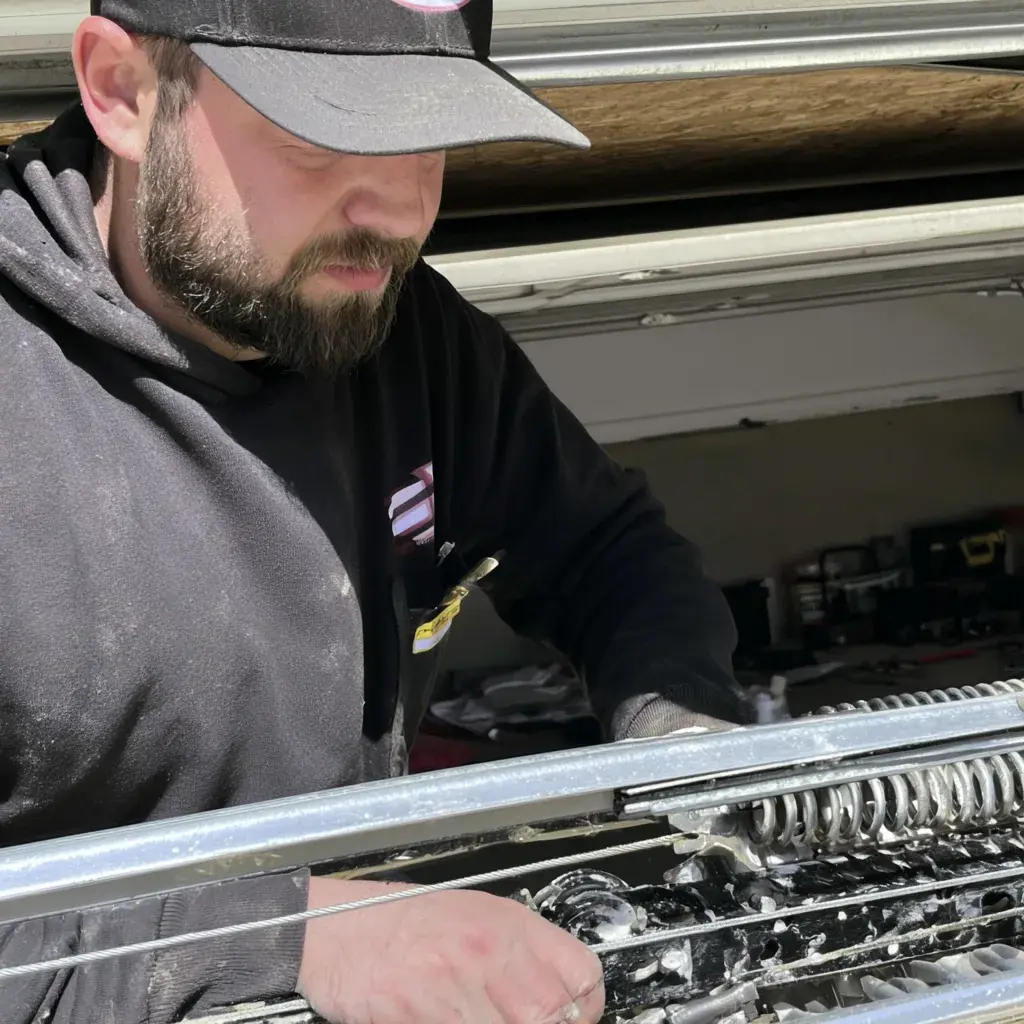
A planned visit is mostly measurement and listening. The technician checks the coil for a clean gap, looks at the lift cables where they wind on the drums, and rolls the door by hand with the opener disconnected to feel for binding. A balanced door stays put at waist height; if it drifts, the spring has lost tension or was undersized from the start. Rollers, hinges and bearings get checked too, because a binding door overloads the spring on every cycle.
A planned visit should leave a record, not just a date for the next one. Ask that the inspection log note cycle use, spring condition, lift cables and drums, and rollers, hinges, and bearings that may bind the door and strain springs. At a Noblesville site near Morse Reservoir, Broadway Street, or Conner Prairie, schedule planned service around times a door can be taken out of use. If a door is crooked, stuck, or its spring appears broken, stop operating it and keep clear. What change in daily use should prompt an earlier check?
Logs, Downtime, and When to Escalate
An inspection log is what makes a schedule useful. Record the date, the cycle estimate since the last visit, what was measured, and what was replaced. Over a year or two the log shows a spring losing tension faster than its rating predicts — the early signal that it was undersized for the door or that something else is binding. Without the log, every visit starts from zero and every failure looks sudden.
An inspection log helps connect each door’s cycle count, condition, and planned service to operating downtime. Record which opening was checked, what wear was found, and whether its interval needs to change as use shifts. In Noblesville, a facility with openings serving different tasks near Pleasant Run can use separate entries to plan access around the door most likely to need attention. Escalate from routine scheduling if a coil has a visible gap, a cable is frayed, or the door drifts; stop using it and arrange professional assessment.
Dealing with this in your home?
When a spring lets go in Noblesville, the door quits mid-track or hangs dead, and the opener starts lifting the whole door by itself. Call +13179788406 and ask the pros we connect you with about your address, whether they cover it, what they charge to come out, and how soon they can. Two-car doors on a subdivision lot take a matched pair; a tired single spring on a ranch is the cheaper call. Either way, say what you hear and see before anyone quotes you a visit.