How Often Springs Need Lubricant
Twice a year is the honest answer for most Noblesville doors, once in fall before the cold sets in and once in spring after the road salt has had its season. A two-car garage in a Westfield or Fishers subdivision that opens four or five times a day asks more of its springs than a ranch door used twice, so the calendar matters less than the cycles. If your door runs daily, do not stretch the interval past six months. Skipping it does not break a spring overnight, but it lets rust and grit work on the coil for years.
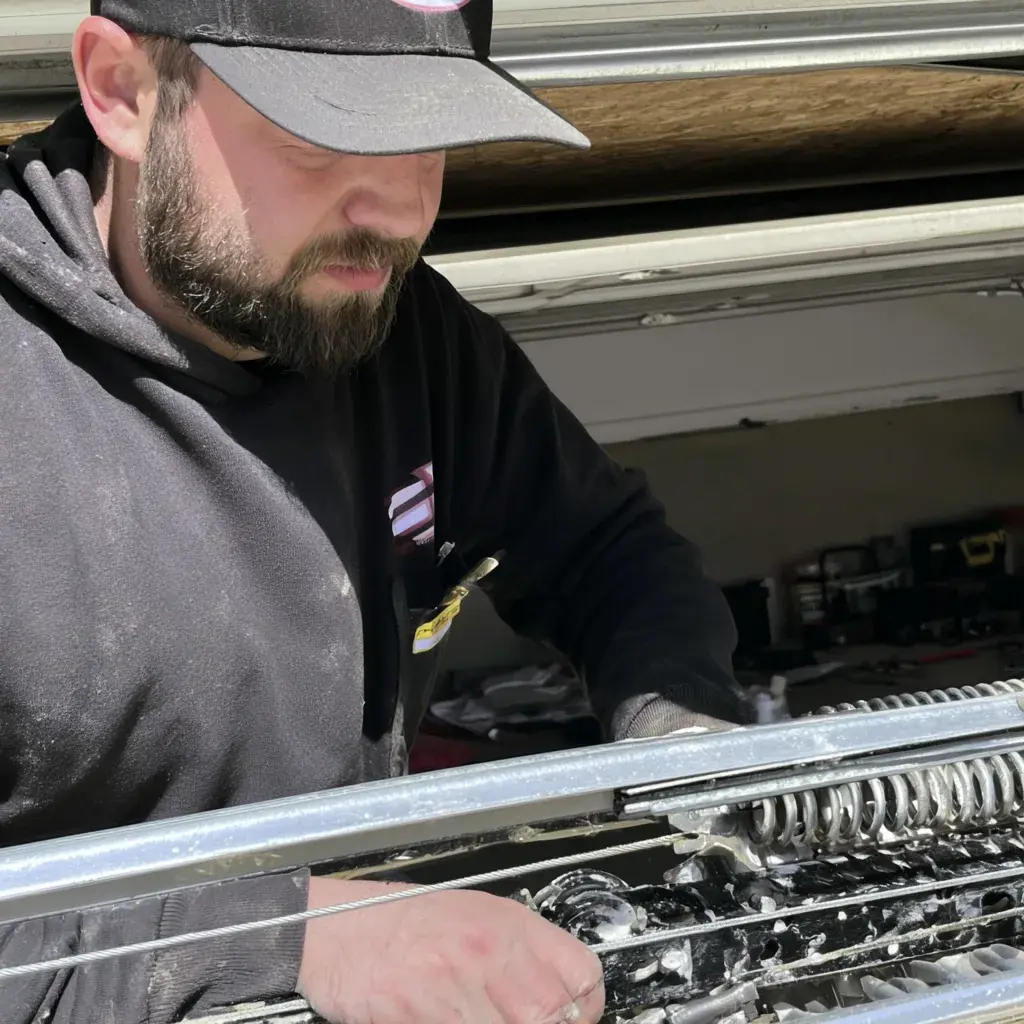
What lubrication buys you is friction control, not immortality. A torsion spring on the shaft above the opening and an extension spring stretched along each horizontal track both ride metal on metal, and a thin film of the right lubricant lets the coils slide instead of grind. That quiets the door and slows wear at the point where the wire rubs itself. It does not add cycles to a spring already rated at its limit, and it cannot rescue a coil that has gone flat.
What to Use and What to Skip
Silicone spray or white lithium grease is what belongs on a spring. Both stay put and neither attracts grit the way a wet oil does. A thin penetrating oil feels like it works because the squeak stops for a week, but it washes out of the coil and collects dust from the garage floor, which turns into a grinding paste. That is worse than leaving the spring dry. One short pass along the length of each coil is enough; you are not painting the door.
While you have the can out, the rollers, hinges and bearings take the same lubricant, and that is often what a homeowner is actually hearing. A dry hinge pin in a Sheridan or Arcadia door can sound exactly like a spring complaint. Do not spray the tracks. Rollers are meant to roll, not slide, and lubricant on the track makes them skid and wear flat. Wipe the track clean and leave it bare.
Seasonal Timing for Indiana Cold
Indiana winters are the reason the fall pass matters. Cold makes the grease in a bearing stiffen and the steel in a spring less willing to flex, and that is when a marginal spring lets go. A door that has been quiet all summer will complain on the first hard freeze. Getting lubricant on the coils and bearings in October does not prevent that failure, but it removes one source of drag so the spring is not fighting the door and the weather at the same time.
Spring is the second window, and the point is different. Road salt and grit tracked in over the winter sit on the coils and the bottom brackets, and a spring that has been bathed in that residue corrodes from the outside in. Rinsing the door down and re-lubricating in April clears the salt before it eats into the wire. A garage door on a lot in Noblesville near a main road sees more of this than one set back off the street.
When Lubricant Is Not the Fix
The costly mistake is treating lubrication as a cure for a tired spring. In Noblesville, whether a garage is near East Main Street, Morse Reservoir, or State Road 238, apply garage-door silicone lubricant to the spring and moving bearings on a simple seasonal routine, especially before cold weather settles in. It quiets metal contact and can limit surface friction; it cannot restore lost lift or mend rust-through. Avoid thin penetrating oil. If you see a gap in the coil, rust-through, or a door that will not stay balanced, stop using it and keep clear; lubrication will not make it safe.
The warning signs matter more than the calendar, whether your Noblesville home is near Morse Reservoir or Conner Prairie. A clean gap in a torsion coil, deep rust-through, or a door that drifts instead of staying balanced means lubrication is not the fix. Stop operating it and keep your hands off the spring, cables, and brackets; loaded hardware can release dangerous force. Do not tighten or unwind anything. Leave the door secured and have the pros we connect you with assess it.
Dealing with this in your home?
When a spring lets go in Noblesville, the door quits mid-track or hangs dead, and the opener starts lifting the whole door by itself. Call +13179788406 and ask the pros we connect you with about your address, whether they cover it, what they charge to come out, and how soon they can. Two-car doors on a subdivision lot take a matched pair; a tired single spring on a ranch is the cheaper call. Either way, say what you hear and see before anyone quotes you a visit.